Embrace the beige: Reimagining lawns amid Colorado’s historic drought
Download MP3Ditch the lawn: CSU researchers say impending drought calls for embracing the beige
INTRO: As of late April 2026, Colorado is experiencing its worst snowpack on record, with nearly 98% of the state experiencing drought conditions. The historically low snowpack is raising alarm over heightened wildfire risks and dwindling water supplies as we head into the summer season.
With water restrictions already being announced in cities like Denver and Aurora, homeowners are left wondering how to care for their lawns, landscapes and gardens without breaking the bank – or the rules.
Researchers with CSU’s Department of Horticulture and Landscape Architecture say this is the time to start rethinking one of the cornerstones of the American home: the lawn.
Today, I’m joined by Associate Professor of Landscape Architecture Lori Catalano and Assistant Professor of Landscape Design and Contracting Scott Curry. We’ll explore how lawns became the stereotypical symbol of curb appeal, the key differences between xeriscaping and zero-scaping, and rethinking what a sustainable landscape looks like in Colorado’s changing climate.
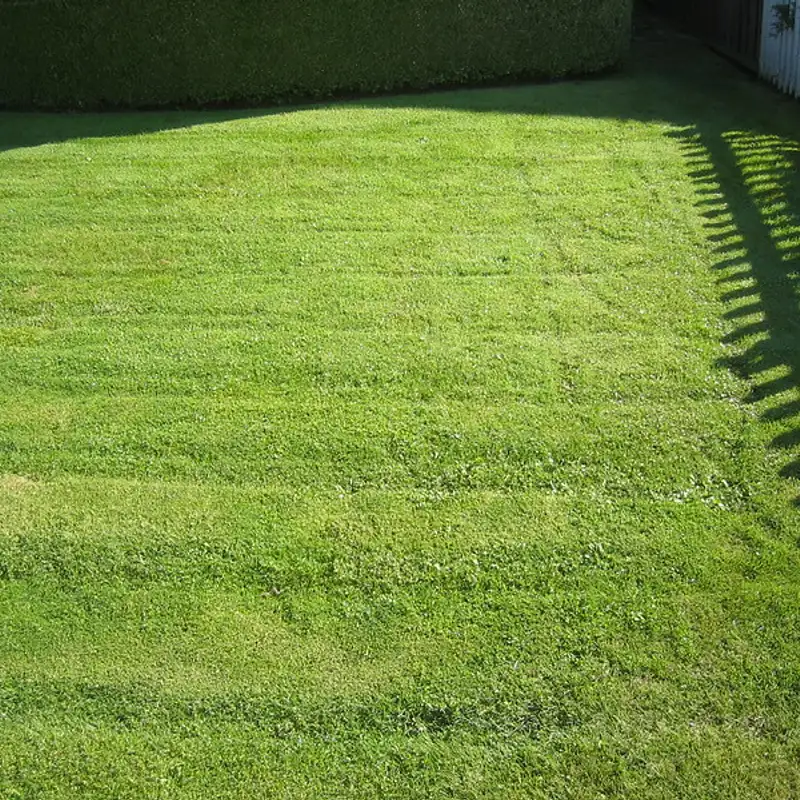
HOST: In the U.S., no home is considered complete without a lush green lawn in the front yard. Lori, when did that become the standard and why do lawns play such a significant role in our culture?
LORI CATALANO: Well, there's a long history to the lawn. If we look back to the settlers moving from East Coast to West Coast, they bring the lawn with them. They bring not only cultural values, animals, plants and birds, but they bring this image of the lawn. But pre-Civil War, there's not really lawns in the U.S. It's not until the 19th and 20th centuries that lawns become more common. I think the most well-known landscape architect to be involved in this, there are actually two, Andrew Jackson Downing and Frederick Law Olmsted, we know him because he was the lead designer of New York City’s Central Park.
The idea of the lawn as a park, a communal landscape gets embedded into the American psyche in a very healthy way. Parks are great for us. Lawns for houses are usually associated with more wealthy properties. But after World War II, real estate and suburban development begin really taking off. That's when the lawn becomes the norm for many people. The lawn is used to make communities cohesive, so they no longer have fences between their houses. It’s really a way of tying all those homes together in a community.
HOST: It seems like in the last few decades we've gotten even more into that idea of the stereotypical suburban look. HOAs have gotten involved and now dictate that you have to have a certain amount of grass in front of your house and it can’t get too long or you’ll be fined. It's gotten very regimented.
CATALANO: Yes, it’s very policy driven now. HOAs are known for that. I think it's because eventually the lawn gets associated with property values. So, if your neighbor's house looks unpainted or their yard is full of bindweed, then you view it as impacting the value of your property.
HOST: How has Colorado’s drought impacted the way people think about lawns and water usage? Or maybe the better question is, how should it impact it?
SCOTT CURRY: If you look at the Colorado River, we're starting to see that Lake Mead is not going to have enough water in it to generate hydroelectric power. That's a real issue. A lot of farmers are not going to have enough water allocated to grow crops this year. That's going to cause big ripple effects outside of just expensive water bills. That's an increased cost of food, an increased cost of energy. These are the ripple effects within that basin that everyone is going to feel. I just heard from an ag economist recently who said: it's not that big of a deal when people can't water their lawn, but when you start to not be able to flush your toilet or buy food at the grocery store, people start to raise an eyebrow at that. Those are the things that we're starting to face here. The issue goes far beyond just the front yard, if you will.
CATALANO: And it feels like maybe that's an area that's probably easiest to go at it from a preservation perspective. I think the lawn is an easy target because we all see it, whether it's policymakers or whoever, to say that individuals should change this and stop doing that. I think that most people want to contribute in their own way. And the way that many people feel as though they can make a difference is to rethink their lawn. That's why it always becomes the top of conversation. It's visual, it's green, we see it. And it's like, oh, that's the bad thing.
It's not necessarily really a bad thing, but it becomes the easiest target. If during a drought somebody is running their irrigation system on days that they're not supposed to, it's very visible to your neighbors who can turn you in. The larger issue is the value that lawns bring to our communities in terms of things like soccer fields and parks, and when we have shade trees that actually cools our cities. So, there are a lot of other values that the lawn can bring, but it’s a much more nuanced question about landscapes in general and the big picture.
CURRY: I 110% agree with Lori. There are things about functional lawns that are immensely valuable like urban wildfire interface, cooling effect and recreational value. We definitely can't discount those things. It just has that one core negative, which is that really consumptive water use. It opens up a really big conversation about landscape composition when we look at specific sites or what we should put where. The whole idea of right plant, right place has never been more important. And we need to think about that, not just on a site-by-site scale, but on a statewide scale.
HOST: You both mentioned that idea of the cooling effect that lawns can have in preventing the heat island effect. That's interesting because I think a lot of people talk about zeroscaping versus xeriscaping. What’s the difference between the two?
CURRY: With zeroscaping, people have this idea that they're just going to back up a dump truck full of rock and just rock over that space and call it good. Zero plants, there's nothing there. With xeriscaping, plants are really the biggest key to making that super effective because if we don't have that plant material, urban heat island effect takes over very quickly. That can make the problem worse. Phoenix is a great example of that. They have so much hard surface and so much rock and decomposed granite that they are actually heating their environment and causing a real problem.
Denver Water is credited with coining the term “xeriscape” in the 1980s but this year they have changed that term to ColoradoScaping. It's a clever rebranding, so people have that pride in their state, and they really understand that this can be a lush productive landscape that supports a lot of things. It's not just about water conservation; there are all these other factors that come into it.
CATALANO: That's a great idea too because historically we tried to follow the Eastern landscape style from a humid climate, and that doesn't work for us. Now we look at Phoenix and Las Vegas, and they have half the precipitation that we have along with different soils. We need solutions to be specific to our region and our climate, then we’ll have a lot more possibilities available to us. Our native grasses and our perennials are beautiful, and even adapted species that are low water all can be incorporated into creating really beautiful four-season landscapes. The idea of just putting down rock mulch is what we're probably the most worried about.
CURRY: Zeroscaping is exactly what we're not looking for, even based on the social and economic values alone. I mean, you're lowering the value of your neighborhood and hurting the environment by doing it. You might save water, but the negatives far outweigh the positives. We don't want a solution that creates another problem. That's why good design and good plant selection, all the things that we're talking about today, are going to be important.
HOST: Scott, you recently noted in your research that outdoor irrigation in Colorado represents about 2.8% of all water used. Now that sounds like, forgive the pun, a drop in the bucket compared to other uses such as agriculture, which we talked about earlier. Why is it important that we focus on this area in regard to water conservation?
CURRY: If we don't do something, it is going to escalate the costs in other areas. It’s a very complex issue when we look at some of those larger uses as far as industrial and agricultural industries, and we're going to have to let Congress and a lot of judges and lawyers figure out some of these things.
What we at least have here is this actionable opportunity that will put more water back in some reservoirs, hopefully keep water bills at least within reason and make our environment more resilient at the end of the day. If you have a landscape that's implemented to survive in a year where we have record low precipitation, that's great. That means that those water bills aren't going to affect you as much. During other years with more precipitation that savings will be just gravy, and it will make your garden look even better.
HOST: As you mentioned, this is something that once you do it, the dividends continue to pay off. That drop in the bucket keeps adding up.
CURRY: This is what I like to call – especially for front yard landscapes – an aggregated effect. The more people that do this, the more water that we can actually conserve. These postage-stamp front yards that are maybe a thousand square feet of turf, that's really not that much water just in one spot. But if you have tens of thousands of people starting to adopt conservation methods, it adds up very quickly. That's why adoption is going to be pretty important for some of these Coloradoscapes going forward.
HOST: Lori, you've spoken about the need to embrace the beige when it comes to our yards. For some, that probably paints a very bleak mental picture. What does embracing the beige really mean?
CATALANO: I say that in a way that hopes to help people begin to look at our landscapes in a much more nuanced way, seeing the landscape through four seasons. Think of your yard not just when you're putting water on it and then it goes away but start to see the seed heads that are left on our grasses or some beautiful stems that are leftover and not cutting them down in the fall, adding that subtlety.
Our landscape in Colorado in the summertime can actually be pretty lush, it's not really beige. In the wintertime many people see our landscape while dormant and think it's dead, or they look at the prairies and they find them boring instead of seeing the subtleties in the colors. There's actually a lot more subtlety in the beige, tan, red and even some stems are kind of blue.
We're designing these new Coloradoscapes to have year-round interest year so that we, as residents, actually begin to see and value and appreciate them more. We can begin to create palettes that are much more visually interesting and also provide more plant diversity.
That’s the thing about the lawn, while there are different species of it, it tends to be somewhat monoculture. The tendency is to want to replace that social norm with another simple social norm. Just swap it for a new species of grass – Bermuda grass or buffalo grass – that does the same thing. Then we don't really have to think in more depth about it. We just replaced that lawn with another green plant.
We're proponents of looking more deeply at that because that's really not a possibility at this point. Thinking about the combinations of plants that we put together and how one could have a flower in the springtime and another in the summertime, or take on a purplish leaf color or bloom in the summer and in the fall, they have seed heads that are left up all winter. With that four seasonality, we’ll begin to bring more interest into our environment and it’s not just about replacing lawn alone.
CURRY: As the climate changes, our plant material is also going to change and so will that nuance of green, brown, tan, blue and purple. It is colorful Colorado at the end of the day. One of the amazing things about our climate is it does have that dynamic look to it, and I think we've trained ourselves to not want that. That's the thing that's really the kicker here is we want consistency in our lives, and that's one thing that a lawn offers. It's going to look very consistent year-round. It needs the same kind of input, and it just doesn't quite invite any surprise. Rethinking your landscape can mean you have something that's going to be ecologically functional at the end of the day and dynamic.
HOST: How do we break away from that way of thinking, though? Is it education? Is it water restrictions? Is it a carrot or a stick?
CURRY: I think you have to use a little bit of both. One of the things that I like to lead with is just showing all of the many beautiful examples we can have. That's a little more of a carrot. You are also going to get some property value out of having xeriscapes. One of the more desired things that people are actually looking for in their home now is an efficient home. So, efficient fixtures inside and an efficient landscape outside. Again, going back to resilience, that's a great thing right there.
I think water restrictions are also going to be a tool. But one thing that they don't tell you is your water provider still needs to sell water in order to keep their head above water, so to speak. That's one of the things that water restrictions are there for. With the reduction of the sale of water, they have to make sure that they can still operate their infrastructure and do the things that they need to do. It's a tool that's important. It has kind of that dual facet because you're going to get people to conserve water because you don't want to spend your entire paycheck on your water bill. And it's going to get people to think about some of these ideas about conserving water. There's definitely a lot of tools in the toolkit.
Education, too. I mean, we're in the business of education here. It's super important. I think that's probably the most important thing for your homeowner. You want to see that this is effective, and you want to see that there's a return on investment. But going forward, the more educated that we are as a population living in this part of the world, that's when we're going to get that embrace. There's a lot more to it there than just conserve water, flip-flop one thing out for another because they're making you. We don't want people to feel like we're making you do anything. There are other options, and this is actually your chance for a little bit of self-expression. If you want to do something different than the other person, that's awesome. That's one of the cool things about the landscape and the personal garden.
CATALANO: I do think there are also going to be some sticks, and maybe some of the sticks that are already out there need to be removed. Some HOAs still require that you maintain a front lawn without weeds that you must regularly mow. That stick needs to go away. Communities need to lead with better examples of landscapes that are more resilient and more appropriate.
They're also beginning to implement different water restrictions. A lot of that is about soil amendments to retain soil moisture that are very straightforward and simple to do if people are aware of them. The water boards are trying to do a good job of communicating that. There are resources out there available to help people as they have questions. So, people shouldn't feel as though they are taking this on themselves and they're the only ones.
CURRY: Under this idea of Coloradoscaping, we're trying to unify the resources as much as possible because I think it's been a little hard for homeowners when you have the city of Colorado Springs saying one thing and the town of Castle Rock saying another thing, and then Aurora, Denver, all these things. We need a unification of the voice of what we're trying to do here, a one stop shop so that there are not all these different voices chirping for slightly different things. I think that's going to create a lot of clarity for people, and it's going to be a lot easier to implement. We want to avoid that barrier of analysis paralysis and just get people to act.
HOST: Well, not to add too many voices chirping, but I do want to get some of your top tips. For someone who is thinking about Coloradoscaping, what are three things that they could do with minimal effort to start?
CATALANO: Make a plan. There's a lot of sticker shock associated with the cost of changing the system. Having a master plan so that you can do it whether that’s by yourself or by someone else, that's the key. There are resources to help you with that. CSU’s Extension Service and the College of Agriculture’s Department of Horticulture and Landscape Architecture have a lot of information about that. Also, when you're going through that process, look closely at soil amendments. And oing around and taking pictures of landscapes that are resilient that you like can be extremely helpful in helping you develop a visual picture of what it is that you're trying to accomplish.
CURRY: One thing I would say is just simply watch your space. See what happens within a day. Just look out your window. Start to figure out where the sun is, where the shade is. I think that's one of the core things that people need to figure out first. What kind of plants can go where? It can be a little shocking for people when they put a hydrangea in full sun and it dies within a month. Why did that happen? Well, maybe that’s not the right plant for that spot. Embrace the idea of right plant, right place.
But don't forget about irrigation. I think it's easy to abandon underground sprinklers really easily but make sure that you get enough information about drip irrigation as well. Even drought-resistant plants are going to need water, especially for the first one to five years. So, making sure that they're watered on a timely basis, easily and efficiently is going to to be another really good thing.
Also, familiarize yourself with all of the different materials. We don't want to just rock everything. Rock is no good. There's actually a real art to making rock look good. Don't be afraid in certain areas if you want some really lush pieces. Wood mulch can be great but if you have really dense plantings, it might not be the best. Bare soil is one of those things that's kind of scary for people but for supporting pollinators and insects and earthworms and all those different things, it can definitely have some value.
CATALANO: Maybe just water a little less and see how much water your landscape really needs. If you're doing four days of watering, go to three and see if your landscape does fine. Maybe you could go to two? You may be able to cut your water use in half just by looking at how much water you put on and then see how little your landscape can survive on. It's patience. I think that's the hard thing about landscapes.
CURRY: It's probably one of the other reasons people love grass – instant greenification. But these gardens, if you love them and nurture them, they're just so much more beautiful and diverse.
HOST: So, we've got our tips now, but where else can people go if they've got more questions?
CURRY: Municipalities have great lists wherever you live. I would encourage people to look at their local municipality. Check out CSU Extension. There's actually a new program that got released as a partnership between extension and the Associated Landscape Contractors of Colorado. It's geared more towards contractors, but you can learn a lot about the entire process with that if you are interested. Plant Select is also a great place to go to learn about those adapted species. Their recommendations come from the seven great steppes of the world, and those are guaranteed, vetted and researched to be good plants for your landscape.
In our Hort432 class, one thing that has been around for a while is, folks doing some conversion on a residential scale can work with a student for a nominal fee, and they'll help you with a design. The students are ready to tell you a lot of the same information that we've told you today, and they're eager to get some experience designing and implementing some of these things.
HOST: Well, thank you both so much for your time.
CATALANO: It's been a pleasure.
CURRY: Yeah, thank you, Stacy. It's a fun conversation to have, a big conversation, and something that we should talk about more.
OUTRO: That was CSU researchers, Scott Curry and Lori Catalano, speaking about how Coloradans can embrace the beige in the face of an impending drought. I'm your host, Stacy Nick, and you're listening to CSU's The Audit.